Friday, 16 March 2018

BIOGRAPHY REBECCA FERGUSON SINGER ENGLISH


Rebecca Caroline Ferguson (born 21 July 1986) is a British singer and songwriter. She came to prominence in 2010 when she became the runner-up of the seventh series of The X Factor, losing to the winner that year, Matt Cardle. She subsequently signed a joint record deal with Syco Music and Epic Records in the UK. She later signed to Columbia Records in the US.

Ferguson's debut album, Heaven, was released in December 2011 to commercial and critical success. The album sold 128k in its first week and peaked at No. 3 in the UK Official Charts, making Ferguson the fastest-selling debut solo artist of the decade between the years of 2007 - 2017. Co-written by Ferguson, it was certified two times platinum in the UK and platinum in Ireland. The album yielded six singles including lead single "Nothing's Real but Love", which enjoyed commercial success throughout much of Europe and Oceania, entering the UK Singles Chart at number 10. A deluxe version of the album included the single "Backtrack", which entered the charts in October 2012 at number 15, giving Ferguson her second Top 20 hit. Ferguson's second studio album, Freedom, was released in December 2013. It met with positive reviews from critics and commercial success in the UK where it charted at number 6 and has since been certified Gold by the BPI. The album's lead single, "I Hope", peaked at number 15 in the UK. In 2012, she was nominated for two MOBO Awards and one MTV Europe Music Award.
 
In 2015 Ferguson released her third studio album Lady Sings the Blues covering a number of jazz classics made famous by Billie Holiday. The lead single "Get Happy" was added to BBC Radio 2's playlist and the album charted at number 7, becoming Ferguson's third consecutive Top Ten charted album in the UK charts. The following year, Ferguson released her fourth studio album "Superwoman". The album reached number 7 on the UK charts, and gained Ferguson her fourth consecutive Top Ten album on the UK charts.She cites Aretha Franklin, Kings of Leon, Christina Aguilera and Amy Winehouse among her influences. She has endorsements with Nescafé and Walkers.
 
 
Rebecca Ferguson was born on 21 July 1986, at Mill Road Hospital, Liverpool, to a father of Jamaican descent and white British mother. She spent the first two years of her life in Huyton. She has a younger brother, Sam. The family then moved to a house on an estate in Woolton Village when her parents separated. Ferguson received her primary education at Woolton Primary School and her secondary and sixth form college education at Gateacre Community Comprehensive School. As a teenager she later moved to Anfield. That was when she became pregnant with her first child Lillie May. Two years later she had her son, Karl. Ferguson has said her family supported her ambition to become a professional singer and helped her through two previous X Factor auditions. She also revealed that she was "bullied as a kid because my family was poor and I never had the right clothes or toys." Despite having a difficult start in life, the hopeful insisted she wanted people to focus solely on her talent. Ferguson also revealed that as a child she always wanted to be a pop star. She revealed on Loose Women that she was abused in a care home when she was 8 years old.
 
Ferguson is a qualified legal secretary, having studied at Hugh Baird College, Bootle. She later commented, "when you have kids, you become a mum and forget about you as a person so I put my dreams of singing aside. There is only so long you can chase the dream when you are a mum. I wanted the kids to see me do well and be a better role model. They were always seeing their mummy fail. That was why I started college."


Ferguson had previously unsuccessfully auditioned for The X Factor and for P. Diddy's Starmaker in New York. She later commented "I went to other auditions, I was invited to New York to audition for P Diddy’s Starmaker and I was told ‘no’. It was really upsetting because I spent money to get there. I also tried out for The X Factor but it did not turn out too well, maybe because I did not have the confidence. I thought I would try Britain's Got Talent or The X Factor again and if that did not work out, I would have to think about what I was going to do."[4]
Ferguson sang "A Change Is Gonna Come" for her audition in front of judges, Simon Cowell, Louis Walsh and guest judge, Nicole Scherzinger.[4] At her bootcamp audition, she sang "Like a Star" to which Cowell said "That is a recording voice!" and Scherzinger said, "I told you first time I saw her, she is our generation’s songbird."[7] She sang "Fireflies" at judges' houses and was sent through to the live shows by mentor Cheryl Cole and assistant will.i.am.[8] For the first live show she sang "Teardrops" and in the second live show she sang "Feeling Good". In the third live show she sang "Why Don't You Do Right?" and in the fourth live show she sang "Wicked Game". In the fifth live show, Ferguson received a standing ovation from Cowell and Cole following her performance of "Make You Feel My Love". In the following episode, Ferguson received another standing ovation from Dannii Minogue and Cole after singing "Candle in the Wind". In the final, she performed a duet with Christina Aguilera, performing Aguilera's hit single "Beautiful". Ferguson's winner's song was a cover of Duffy's "Distant Dreamer", but she finished as the runner-up to Matt Cardle, making her the first female runner-up on The X Factor.
 
After the final, it was announced that Ferguson had been signed by Syco Music. In January 2011, it was reported that Ferguson had signed a joint record deal between Syco Records and Epic Records.[Ferguson and nine other contestants from the series participated in the X Factor Live Tour from February to April 2011. The tour saw Ferguson performing for 500,000 people throughout the UK
 
 
Ferguson released her debut single "Nothing's Real but Love" on 20 November 2011, which was written by Ferguson and Eg White. The single peaked at number ten on the UK Singles Chart.Her debut album Heaven followed and was released 5 December 2011 in the UK. The album features Ferguson collaborating with Eg White, Steve Booker, Fraser T Smith, Xenomania, Paul Barry, Mark Taylor and Brian Higgins. Ferguson later revealed that she would be co-writing the whole of her album in order for her to "connect" with the songs. The album would feature genres like Soul, pop and Blues. The album came to critical acclaim with critics lauding Ferguson for being the first credible artist to come from reality television format. Cowell also praised the album tweeting on 21 November how proud he was of Ferguson, "I am absolutely blown away by Rebecca Ferguson, her album and by her performance. Congratulations!".
 
 The album was certified platinum for shipments of 300,000 units by the British Phonographic Industry in its first two weeks of release.
On 18 November 2011, Ferguson announced her first headlining UK and Ireland Tour, spanning 14 dates from 20 February to 13 March 2012. Due to high demand, Ferguson had to add more dates to her tour, all of which have sold out. Ferguson confirmed on her official website that the second single to be released from the album will be "Too Good to Lose".[14] The single was originally meant to be released on 26 February but later pushed back to 4 March. The official video premiered on Ferguson's website on 2 February. The single release has been edited and shortened to make the track more radio friendly. Ferguson dueted with Lionel Richie on an ITV1 special entitled This Is Lionel Richie, in which she performed "Endless Love". Starting in February 2012, an excerpt from Ferguson's "Nothing's Real but Love" was used in a television advertisement campaign for Nescafé Gold Blend coffee. "Glitter & Gold" was confirmed via Ferguson's official website to be the third single taken from the album which was released on 29 April 2012. In April 2012, Ferguson broke her left leg during a night out, which kept her wearing a cast for several weeks. During performances on Britain's Got Talent and Alan Carr: Chatty Man, she performed while sitting on a stool.
 
On 29 May 2012, Ferguson made her American television debut when she sang "Nothing's Real but Love" on The Today Show. She also performed the song on The View. On 13 July, Ferguson revealed via Twitter that she would be taking her management team to court, after they made her work until she collapsed.The relationship deteriorated further in September 2012 with the former management company filing a High Court writ, asking for a declaration that the star unlawfully ended her contract and seeking 20% of her future earnings.
 
In an interview in March 2012, Ferguson stated that she expected to release her second studio album in 2014, that she would start writing the album in 2013 once promotion for Heaven had finished, and that she expected to take a more up-beat approach to the album. On 23 August 2012, Ferguson announced she would release a deluxe version of Heaven on 15 October 2012, and she would also release her fourth single "Backtrack" the day before. Ferguson performed Backtrack on the second The X Factor results show on 14 October. On 16 September, Ferguson released an EP of live tracks from the 2012 iTunes Festival, which featured five tracks including "Nothing's Real but Love".
 
 During an interview with Chart Show TV, Ferguson confirmed that "Shoulder to Shoulder" would be released on 9 December 2012 as the final single from Heaven before starting work on her second studio album. Ferguson performed the single on Chatty Man on 14 December. However, "Teach Me How to Be Loved" was released as the album's final single in Germany. Ferguson features on the charity record He Ain't Heavy, He's My Brother including other singers such as Paloma Faith, Paul McCartney and Robbie Williams. The single is to raise money for various charities associated with the Hillsborough disaster.[20] The song achieved Christmas Number 1 in the United Kingdom.[
 
In October 2012, Ferguson stated she would embark on a US tour in January 2013 and that she had already begun writing new material for her second album.[22] On 29 November 2012, Ferguson confirmed her plans to tour in the US and said she would release her second album late next year, stating, "I'm going back to touring the US more early in the new year and then I am getting stuck into writing the new album which should be out later in 2013 or 2014."
She began work on her second studio album on 18 February 2013 after a month hiatus and completed the album in mid-August. In July 2013, Ferguson revealed she was in the stages of finishing up her second album, also saying that it "has been hard to make" and that she was writing about her babies. On 22 August 2013 she revealed on Facebook that her new album would be called Freedom and would be released on 2 December 2013 along with putting up pre-order links to the album.
The lead single, "I Hope", was uploaded to Ferguson's YouTube channel on 12 October 2013 and was released on 1 December 2013, entering the UK singles chart at number 15; in mainland Europe "Light On" was released as the lead single from the album. Freedom was released the following day and entered the charts at number 6 and has since been certified Gold by the BPI. Freedom was met with generally positive reviews from critics. The album includes a duet with US soul star John Legend and production/songwriting from Jarrad Rogers, Toby Gad and Eg White.
 
On 7 August 2014 Ferguson tweeted that she was back in the studio confirming the work of a third studio album stating "amazing day at the studio working with the same musicians that frank Sinatra used and so many other greats feeling very blessed". On 13 January 2015 Ferguson revealed the album title, artwork and release date via her Vevo channel. Lady Sings the Blues was released on 9 March 2015 via RCA Records.
 
 The album charted at number 7 on the UK Albums Chart.
 
On 9 May 2015 Ferguson performed at VE Day 70: A Party to Remember in Horse Guards Parade, London. On 4 October 2015 Ferguson confirmed the creation of a new studio album by posting on Twitter that she is "busy recording" and "the next album sounds good already". The first single from the album was announced on 30 August and is called "Bones", a cover of a 2013 track by NZ artist Ginny Blackmore, and was released on 2 September 2016. The album "Superwoman" was released on 7 October. Ferguson toured from 23 October to 15 November across the UK.
In December 2016 she was on Fern Britton Meets. In the interview Ferguson, the former teenage mum who became an X Factor singing sensation, revealed how her Christian faith got her through troubled times, both on the show that brought her overnight fame and in the years that followed. From being the victim of fraud to being left to bring up a child on her own, Ferguson says she is speaking out to help others.
 
 
On 21 April 2017, she announced she was working on her next album, her fifth material. On 2 October, the same year she announced through her Facebook page that she was no longer with her management company but was working on new projects and touring in 2018. She released the first single "Uncrazy" from the album on 1 December 2017, a dance song, which moves away from Ferguson’s usual style of music.
 
 
Ferguson met the father to her two oldest children, Karl Dures, on holiday in Tenerife, but had previously met and known each other for some years. Ferguson and Dures dated for four years and had two children named Lillie May and Karl. She also has a daughter named Arabella, born in 2014, from a later relationship.
Ferguson previously dated fellow The X Factor contestant and former One Direction member Zayn Malik, which caused controversy due to the six-year age difference. The relationship ended after four months together. In November 2011, Ferguson addressed the media interest, saying: "When I was in a relationship with Zayn it was quite hard, but it comes with it. Me and Zayn just grew apart. I wish him all the best." In 2011, Malik also commented, "Even though it was a mutual decision, when you have a proper heartache like that, I don't think you fully get over it. We're still friends and talk all the time.
 
Ferguson's first album is of the soul, pop, blues and R&B genres, with lyrics describing heartbreak and relationships. Her debut album's music was compared to work by Aretha Franklin and Macy Gray. On describing her own sound she said, "quite soulful, I don’t know what you compare it to. I’m just me."
 
 
Ferguson cites Aretha Franklin as one of the artists who had the biggest influence on her. She says she draws inspiration from Franklin, whom she calls the "Queen of Soul". In an interview with MTV UK, when asked about being compared to Franklin she stated, "Aretha Franklin to me is like the queen of soul, so on one hand, I like being compared to her, but on the other hand, I don’t think I’ve achieved anything yet to be compared to someone who, to me, is an absolute legend. I’m literally just starting out and it's lovely and I feel really blessed that people are comparing me to her, but to me she’s in a totally different league... she’s Aretha, she’s like a soul diva. So hopefully God willing in the future when I’ve come to her age I will have earned that, but I don’t feel I have yet." She also revealed how she wished to have collaborated with Franklin on her debut album. She cites band Kings of Leon as an inspiration. On the question of collaborating with Kings of Leon she said, "I’d like to see what happened. I just think it would be cool, I love them as musicians and they play really well so I’d love to just write with them maybe...I’m dreaming here but you never know, I could rock out with the Kings of Leon." Ferguson also cites the late soul singer Amy Winehouse as one of her biggest influences, stating that she respected Winehouse as "she was real and wasn't in it for the fame, she was artistic and her music is lovely." She also cites Sam Cooke, Otis Redding and Nina Simone among her influences.
 
 
Ferguson became the new face of Walkers crisps Sunbites as of June 2011. She starred in an ad that features her visiting her hometown. Created by AMV BBDO, the ad was launched across press, online, social media and TV. It became Ferguson's first ad as part of the campaign. Ferguson also opened her Beauty Boudoir in 2012 on Priory Road, Liverpool. The store is a reflection of the 1960s and is thought to be inspired by the beauty of the likes of Marilyn Monroe


Friday, 9 March 2018

FESTIVAL IN LONDON 25 th AUGUST 2018 WITH MUTYA BUENA


OWEN JAMES VINCENT

PHOTOGRAPHER

of MUTYA BUENA

with AGENCIES
AMCK MODELS, DAM MODELS, PRM,

ONE TIME MANAGEMENT, HMG MODELS
LONDON

info@owenvincent.co.uk


Sunday, 10 September 2017

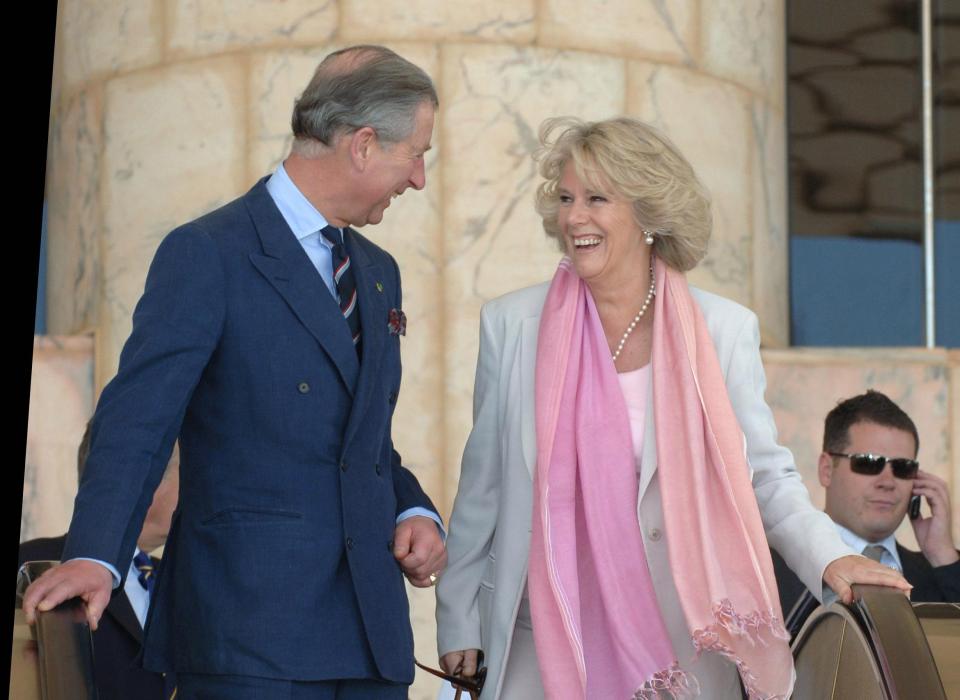
PRINCE CHARLES AND CAMILLA PARKER BOWLES-ROYAL BRITISH -


Prince Charles, the oldest son of Queen Elizabeth II and Prince Philip, is the heir apparent to the British throne. Born on November 14, 1948 as the oldest son of Queen Elizabeth II and Prince Philip, Prince Charles is the longstanding heir apparent to the British throne. Under public scrutiny his entire life, Charles graduated from Trinity College before embarking on a military career which culminated with him commanding the HMS Bronington. He married Diana Spencer in the summer of 1981 to huge media fanfare, though the couple would eventually divorce in 1996 after years of gossip and scandal. Charles later wed longtime love Camilla Parker Bowles some time after Princess Diana's death. He is the father of Princes William and Harry and is also a grandfather. Among his many philanthropic and Harry and is also a grandfather. Among his many philanthropic and environmental endeavors are the Prince’s Trust and the Prince’s Rainforest Project.

Background and Early Life

Prince Charles was born Charles Philip Arthur George on November 14, 1948, in London, England. The son of Queen Elizabeth II and Prince Philip, Charles ascended the royal hierarchy at an early age. His mother became queen when he was only three after the death of his grandfather King George VI in 1952. As Elizabeth's oldest child, Charles became the heir apparent to the British throne and received the title of Duke of Cornwall. Charles was also destined to become Great Britain's oldest heir apparent, with his mother remaining queen for more than six and a half decades.
In 1956, Charles went to the Hill House School in London before heading off to boarding school at the Cheam School the following year. In addition to his education, he had increased responsibilities as he was made the Prince of Wales and Earl of Chester at the age of nine. Beginning in 1962, Charles changed schools again to go to Gordonstoun in Scotland. Later in the decade he also studied in Melbourne, Australia as an exchange student.
Charles then studied archaeology, anthropology and history at Trinity College, part of the University of Cambridge, from 1967 to 1970. In addition to his studies, he was active in campus life, involving himself in several activities such as polo. After receiving his degree in 1970 (the first royal heir apparent to do so), Charles embarked on a career in the military.

Military Service

After six months of aviation training with the Royal Air Force, Charles joined the Royal Navy in 1971, going on to serve on the HMS Norfolk and receiving a promotion in 1973 to acting lieutenant. 
During the mid-'70s, Charles joined the Royal Naval Air Station to receive helicopter training, and later served as a helicopter pilot for the 845 Naval Air Squadron, based on the HMS Hermes. His time with the Hermes included a tour of Caribbean and Canadian waters before he took up additional course work at the Royal Naval College in Greenwich. In 1976, Charles ended his military service as commander of the HMS Bronington, the same year that he established the Prince's Trust, a charitable organization dedicated to helping improve the lives of disadvantaged youth.
Towards the close of the decade, Charles further expanded his military skill set with parachute training, having already taken the reigns at times as the pilot for the Queen's Flight, the monarchy's official aircraft. The prince was eventually promoted to Group Captain for the Royal Air Force in 1995, and in the new millennium was again promoted to the rank of Air Chief Marshal.   

Marriage to Diana

As a public figure, Charles came off to many as intelligent, aloof and a bit awkward. He was used to having every move he made scrutinized by the press, but even he could not have been imagined what a sensation his relationship with Lady Diana Spencer would cause. The two had known each other when they were young but were reintroduced in the late 1970s. Despite a 13-year age difference as well as divergent interests, the couple became engaged in February 1981. The public took a strong liking to his shy, former kindergarten teacher fiancée, finding her more accessible than the reserved prince. They were married on July 29, 1981, in a lavish ceremony that was broadcast around the world and watched by millions of people.

Divorce and Tragedy

Charles and Diana had two children together. Their first son, Prince William Arthur Philip Louis, was born on June 21, 1982, and their second son, Prince Henry "Harry" Charles Albert David, was born on September 15, 1984. Unfortunately, their common love for their children was not enough to hold what was billed as a fairy tale marriage together. The union became strained over the years with royal responsibilities, personal conflicts, media pressures and infidelities. Charles reportedly reignited a relationship with his former flame, Camilla Parker Bowles, while married to Diana. The couple officially separated in 1992 and divorced in 1996.
Diana, Princess of Wales, died in a car crash in Paris in August 1997. Despite their differences, Charles traveled with her sisters to France to accompany her body back to England. During her funeral procession, he walked with their sons—William, 15, and Harry, 12—and Diana's brother, Earl Spencer. Charles took his role as father to his grieving sons seriously, asking the media for privacy for his family.

Marriage to Camilla and Philanthropy

After years of quietly maintaining their relationship, Charles married Camilla Parker Bowles on April 9, 2005. She then became the Duchess of Cornwall and now often accompanies her husband on many of his official visits. Besides his royal duties, Charles has been become a leading philanthropist. In addition to the Prince's Trust, he has backed a huge array of charitable organizations, supporting efforts to improve educational services, fund arts initiatives, support sustainable business endeavors, provide employment opportunities to older citizens and help the environment. 
 
In 2007, Charles launched the Prince's Rainforest Project, a global initiative with corporate and celebrity backing to curtail tropical deforestation and thus aid the quest to stanch climate change. And in a nod to religious diversity and the multicultural nature of modern England, Charles has also promised to have a multi-faith coronation if or when he takes the throne.
 
In addition to his philanthropic work, Charles is also an avid watercolorist and has published several books, including the 1980 children's story The Old Man of Lochnagar, 2010's Harmony: A New Way of Looking at Our World and 2012's The Prince's Speech: On the Future of Food
In 2007, Charles launched the Prince's Rainforest Project, a global initiative with corporate and celebrity backing to curtail tropical deforestation and thus aid the quest to stanch climate change. And in a nod to religious diversity and the multicultural nature of modern England, Charles has also promised to have a multi-faith coronation if or when he takes the throne.
In addition to his philanthropic work, Charles is also an avid watercolorist and has published several books, including the 1980 children's story The Old Man of Lochnagar, 2010's Harmony: A New Way of Looking at Our World and 2012's The Prince's Speech: On the Future of Food. 

Grandchildren

In 2013, Charles took on a new role: He became a grandfather with the arrival of George Alexander Louis—known as "His Royal Highness Prince George of Cambridge," the son of Prince William and Duchess of Cambridge Kate Middleton—on July 22. Soon after his grandson's birth, Charles released a statement: "Both my wife and I are overjoyed at the arrival of my first grandchild. It is an incredibly special moment for William and Catherine, and we are so thrilled for them on the birth of their baby boy." Charles soon had a granddaughter as well, Princess Charlotte (with a name honoring both her grandfather and maternal aunt), born on May 2, 2015. 
 

BIOGRAPHY CAMILLA PARKER BOWLES
 
Camilla Rosemary Shand (ex-wife Parker Bowles), born July 17, 1947 in London, is the second wife of Prince Charles, Prince of Wales. Since their marriage she is known under the predicate of Her Royal Highness the Duchess of Cornwall.
The official site of the Prince of Wales mentions that she should use the title of "Her Royal Highness the Princess Consort" on her accession to the throne.3 As a second wife, legal experts agree on this position . Others, on the contrary, consider that his position as second wife does not prevent the Duchess of Cornwall from becoming queen consort of the United Kingdom, if her husband accedes to the throne.
 
Camilla Shand, born July 17, 1947 in London, spent her youth in Plumpton, a small village in the Sussex Hills. She is the daughter of Major Bruce Shand, an officer of the British Army converted into the wine trade, and Rosalind Cubbitt of the Ashcombe family of barons.

By her father, she is the niece of Elspeth Howe (Lady Howe) 4, British politician and peer, granddaughter of the writer Philip Morton Shand. Her mother is the great-granddaughter of Alice Keppel (born Alice Edmonstone) (1866-1947), who was the mistress of the Prince of Wales, Edward, the future King Edward VII (1841-1910), the great-grandfather of Prince Charles.

It also includes Arnold Joost van Keppel (c.1670-1718), first earl of Albemarle, favorite of William III of England, stadtholder of the United Provinces (1672-1702) ) and King of England (1689-1702).
 
 
Camilla met the Prince of Wales in 1970, during a polo match. The idyll is short-lived: Charles enlisted in the Royal Navy, before marrying Diana Spencer in 1981, while Camilla married Major Andrew Parker Bowles in 1973.Due to the marked hostility of a section of British public opinion, some imagined that Camilla Parker-Bowles, after her marriage with the Prince of Wales, would receive the simple title of "Duchess of Cornwall" and that, the possibility of an accession to the throne of her husband, she would not become queen, but merely retain her ducal titularity. However, developments between the announcement (February) and the celebration (April) of the wedding, on March 21, 2005, invalidate these projections.Indeed, the British Government has studied the matter at length and, although it initially advocated the previous solution, on March 21, 2005, the Minister of Constitutional Affairs, Christopher Leslie, had to acknowledge in his written answer to a question of a jurist, that there was no evidence that the marriage of the Prince of Wales and Mrs. Parker Bowles could be of a "morganatic" nature. Andrew Mackinlay, the jurist who had asked the original question, came to the conclusion that Prince Charles's accession to the throne would automatically entail a "queen" titulation for his wife: "It is absolutely unequivocal that it becomes automatically queen when he becomes king. This interpretation was immediately confirmed by the Department of Constitutional Affairs, who pointed out that the constant use, for centuries, having always been that the king's [legitimate and non-morganatic] wife is itself titled queen , only the passing of a law to the contrary would be liable to change this state of affairs. Immediately, the marriage does not alter the arrangements until the Prince of Wales enters the throne. Camilla uses the predicate of Her Royal Highness and the titles of Duchess of Rothesay (Scotland) and Duchess of Cornwall (elsewhere), without the title of "Princess of Wales "since it refuses.
 
The Duchess of Cornwall is the royal patron of Emmaus UK, the British branch of the Emmaus Movement, and of ShelterBox, a humanitarian organization providing emergency shelter, of which she is also the president.Since her marriage she has been commonly appointed by her duchess of Cornwall titles and does not use the title of Princess of Wales. His complete titulary is "His Royal Highness Princess Charles Philip Arthur George, Princess of Wales, Duchess of Cornwall, Duchess of Rothesay, Countess of Chester, Countess of Carrick, Baroness of Renfrew, Lady of the Islands, Princess of Scotland, Grand Lady -croix of the Royal Order of Victoria ".According to the official site of the British monarchy, being the second wife of the crown prince, the present Duchess of Cornwall should, in the event of an accession during her lifetime of Prince Charles to the throne, bear the title of "Her Royal highness the princess consort "7 instead of her majesty the queen.It is known in succession under the names:17 July 1947: Miss Camilla Shand4 July 1973: Mrs Andrew Parker Bowles3 March 1995: Mrs Camilla Parker Bowles9 April, 2005: Her Royal Highness the Duchess of Cornwall In Scotland: Her Royal Highness the Duchess of Rothesay.
 
 
DISTINCTIONS
GBR Family Order Elizabeth II BAR.png 30 October 2007: Order of the Royal Family of Queen Elizabeth II


Royal Victorian Order UK ribbon.jpg April 9, 2012: Queen's Grand Cross of the Royal Victoria Order (GCVO) 10


Order of the Star of Melanesia.png November 3, 2012: Companion of the Order of the Star of Melanesia (CSM, 2012)


National Order of Merit GC ribbon.svg June 6, 2014: Grand Cross Lady of the National Order of Merit
 
 
MEDALS
SCM ribbon.png June 7, 2005: Saskatchewan Centennial Commemorative Medal (Canada)

QEII Diamond Jubilee Medal ribbon.png February 6, 2012: Diamond Jubilee Medal of Queen Elizabeth II


Friday, 8 September 2017

BIOGRAPHY LADY DIANA - ROYAL BRISTIH -

Diana Frances Spencer, born July 1, 1961 in Sandringham (Norfolk County) and died on August 31, 1997 in Paris, is a British aristocrat, wife of Charles, Prince of Wales, from July 29, 1981 to August 28, divorced.Diana was one of the most famous women in the world at the end of the 20th century. His emotional distress during the 1980s and 1990s inspired many biographies, photos, newspaper articles and television films. She was also a world emblem of charity, creating a number of associations to defend such causes as the fight against AIDS or the eradication of antipersonnel mines.From her marriage until her divorce, her titles were: Her Royal Highness the Princess of Wales and Countess of Chester, Duchess of Cornwall, Duchess of Rothesay, Countess of Carrick, Baroness of Renfrew, Lady of the Islands, Princess of Scotland ; but her official title was Her Royal Highness the Princess of Wales. After her divorce in 1996, the Queen granted him the title of "Princess of Wales" courtesy without a predicate. It is, however, better known in France under the name of Lady Diana and even more under the diminutive Lady Di; the press also called her Princess Diana, although this was incorrect, since this title is reserved for princesses of blood.


Descendant of Georgiana Spencer, Duchess of Devonshire; great-grand-niece of Georges Spencer; Diana Frances Spencer is the younger daughter of Edward Spencer (1924 - 1992), Viscount Althorp and her first wife, Frances Burke-Roche (1936-2004). The Viscountess came from a family that had emigrated to America. Her grandmother, Frances Work, born in New York, was a descendant of Charles II of England (in illegitimate descent) and, through him, Henry IV, King of France, Saint Louis and Hugh Capet.In addition, Diana and her friend Sarah Ferguson also had distant relationships, as Sarah was also a descendant of Georgiana Spencer, by her illegitimate daughter, Eliza Courtney. Later, Diana favored Sarah's marriage to Prince Andrew of the United Kingdom, his brother-in-law. This union will also result in a divorce, but, unlike the princes of Wales, the couple will remain on good terms. Diana's parents were also divorced; this hectic separation caused by the vicomtesse's adulterous relationship with the heir of a wallpaper fortune, Peter Shand Kydd, had made the girl the stake of a lawsuit that her mother sued her ex-husband to obtain the custody of Diana and her brother.Third daughter of Viscount Althorp, then thirty-seven years of age, and Viscountess, twelve years her younger, Diana soon experiences a feeling of guilt because she is not a boy, the long-awaited male heir of the couple, especially since in 1960, Lady Spencer had given birth to a boy so fragile that he lived only a few hours2.At the death of his paternal grandfather, Albert Spencer, in 1975, Diana's father became the 8th Earl Spencer, and she became Lady Diana Spencer. The following year, his father, Count Spencer, married Raine McCorquodale, recently divorced from the Earl of Dartmouth, the eldest daughter of novelist Barbara Cartland.Diana studied at Riddlesworth Hall in Norfolk and then at the West Heath Girls' School in Kent. At 16, she studied for a short time at the Alpin Videmanette Institute, an institution for young girls of good family in Rougemont, Switzerland. Pianist, she was also a great athlete, and wanted to be a dancer


The girl's family had been known to the British royal family for generations: her maternal grandmother, Lady Fermoy, was one of the Queen Mother's maids of honor, and the Prince of Wales had a short liaison with Sarah Spencer, Diana's older sister.Indeed, the love of the Prince of Wales has always been the favorite subject of a certain press that has lent him many connections. In his thirties without being able to marry the woman he loved, Camilla Shand, he multiplied the ephemeral links. So he was almost summoned by the queen to marry.To be accepted by the members of his household, notably his great-uncle Lord Mountbatten, who had arranged the marriage of Prince Philip and the queen, and his advisers, the prospective betrothed had to be of aristocratic extraction, evidently unmarried and Protestant - a divorcee or a non-Protestant was excluded, the British sovereign being also head of the Anglican Church, (the court recalled the painful precedent that led to the abdication and exile of King Edward VIII great-uncle of the Prince of Wales in 1936) and of excellent reputation, or preferably without reputation at all (to avoid the gossip of a previous fiance). Diana met all these requirements.Camilla Shand, who had become Mrs. Parker-Bowles, who had refused to marry her in order not to endure the constraints of an official life but remained her confidant, led the royal family to elect as future queen, Diana Spencer, Knightsbridge's Young England 's nine-year-old assistant.Buckingham Palace announced the engagement on 24 February 1981. Lord Mountbatten had in any case rejected Camilla Parker Bowles because of her age (she was the eldest of the 16-month-old prince), her experience of life and her lack of blood sufficiently aristocratic, as well as his outspokenness.The wedding took place at St. Paul's Cathedral in London on Wednesday, July 29th, before 35,000 guests (including Mrs. Parker Bowles and her husband, the queen-mother of the Queen Mother) and a billion viewers worldwide.


The press remarked that the last marriage of an heir to the throne with an English subject dates back three hundred years earlier when in 1659 the future James II of England married Anne Hyde. This king of the House of Stuart had, moreover, been dethroned by his son-in-law and his daughter, who enabled their distant cousins ​​of the House of Hanover to accede to the British throne because they were Protestants. The Prince of Wales was descended from the latter.From the time of her marriage, Diana became the third woman in dignity in the United Kingdom, just after the queen and queen mother, famous for being the soul of the English resistance to the Hitler invasion. The young princess was immediately loved by the British and the whole world.The "Princes of Wales" quickly had two children, William, born June 21, 1982, and Henry (nicknamed Harry), born September 15, 1984.Hardly supporting the constraints of a court life and after the birth of her eldest son, the Princess of Wales made a depression, suffered from bulimia and tried several times to commit suicide. In an interview (published after her death), she declared that during her first pregnancy (she carried the child called from birth to become a king day), she had thrown herself on a staircase and had been discovered by the Queen . In the same interview, she said that Charles had accused her of screaming at the wolf when she threatened to commit suicide. If her suicide attempts had actually taken place, she would have risked a miscarriage.In the early 1990s, revelations about the failure of the couple's marital life were at first concealed and then dramatized by the international press. The Prince and Princess of Wales addressed the press through their friends, accusing each other of adultery. Disconcerted, Charles reunited with Camilla Parker Bowles, while Diana, disillusioned, multiplied adulterous relationships, especially with James Gilbey (who was involved in the Squidgygate affair). She later confirmed (in an interview with British journalist Martin Bashir) that she had an affair with her riding instructor, James Hewitt. She reportedly had another affair with one of the bodyguards assigned to her security, although she categorically denied having sex with him, as well as Oliver Hoare, a married art dealer.The Prince and the Princess of Wales separated on December 9, 1992, and the divorce was pronounced on August 28, 1996. She lost the predicate of Royal Highness and became a purely honorary Diana, Princess of Wales. It received an indemnity of more than 17 million


Buckingham Palace stated that Diana being the mother of the second and third heirs of the British throne, remained a member of the British royal family.
 
In 2004, NBC television broadcasted videos where Diana commented on her marriage to the Prince of Wales and gave her version of her attempted suicide. The videos belonged to the princess, but at her death, her butler took possession. After numerous legal proceedings, they were handed over to his singing teacher who had authored it. These videos are not yet available in the UK.


When Prince Charles negotiated his divorce, it was decided that Diana would be withdrawn from her title of Princess of Wales but that she could keep it as a courtesy. She was also able to keep her apartments 8 and 9 at Kensington Palace, which she had occupied since the beginning of her marriage and where she remained until her death. She also continued to use two offices at St. James's Palace
In 1995, Diana started a passionate idyll with Dr. Hasnat Khan, a cardiothoracic surgeon at the Royal Brompton Hospital where she met him on September 1, 1995 when he had just operated one of his old friends . She discovered the joys of anonymity to hide their relationship, wearing wigs, scarves and glasses. In May 1996 and 1997, she went to Pakistan for charity but mostly to meet the doctor's traditionalist family, the "love of her life", that she was thinking of marrying but the Khan refused to have their son marry to a non-Muslim woman. Worse, what Hasnat Khan was afraid of, their romance began to leak in the media, ending their relationship in June 1976.
Diana, who wanted to regain control and take revenge on the royal family, began a relationship with Dodi Al-Fayed, the son of the Egyptian billionaire Mohamed Al-Fayed, who was also taking his revenge since the British citizenship was refused.
But this romance was only a facade, a lure destined to make jealous Hasnat Khan orchestrating for this purpose the publication of the famous photos of her and Dodi in the Gulf of Saint-Tropez. On her own initiative, she performed her various bathing suits, diving from the private jetty of the Al-Fayed family villa, jet skiing with her children, or on their luxury yacht Jonikal.
 
 On August 10, 1997, one of the Sunday Mirror titled The Kiss, showing Dodi and Diana hugging. Although it is highly questionable whether it was a stolen photo, the tabloid later admitted that the photo had been retouched. But Diana, who had become an expert in media manipulation by lending herself to the game of the paparazzi, felt progressively caught in her own trap, conscious perhaps of going too far in the media exposure of her love affairs which she gave to her ex-family, this exhibition touched her children in turn) or tired of this media harassment.


In the late 1980s, the Princess of Wales became known for her support for humanitarian causes such as helping AIDS victims or combating the use of antipersonnel mines. She especially helped the poor children of Africa and was at the side of many personalities like Nelson Mandela, Mother Teresa and the Dalai Lama.
In April 1987, the Princess of Wales was one of the first celebrities to be photographed touching a person with the HIV virus. His contribution to changing public opinion about HIV-positive people was summarized in the words of Bill Clinton in December 2001 in Diana, Princess of Wales. Read on AIDS:
 
"In 1987, when a large part of the population believed it was possible to contract AIDS through simple contacts, Princess Diana sat on the bed of an AIDS patient and shook her hand. She showed the world that HIV-positive people do not deserve isolation but compassion. These positions have helped to change global opinion, give hope to people living with HIV and save lives. "
 
Her investment in humanitarianism may be the most high profile of her trip to Angola, when in January 1997 as a VIP volunteer with the Red Cross and Red Crescent, she visited anti-personnel mine survivors, demining projects organized by the British HALO Trust and supported education and awareness programs on the dangers of mines in the immediate environment of houses and villages.
In August of the same year, she went to Bosnia with the Landmine Survivors Network. She paid close attention to the injuries that anti-personnel mines caused well after the end of a conflict, and often to children.
Its influence on the signing of the Treaty for the Prohibition of Antipersonnel Mines, Treaty of Ottawa on December 3, 1997 (shortly after its death) by 122 countries predominated14. In presenting the Landmines Bill to the British House of Commons in 1998, Foreign Minister Robin Cook saluted Diana's contribution in these terms:
 
"All members of this assembly will be grateful to the Princess of Wales for revealing the human cost of anti-personnel mines. The best way to take into account its action as well as that of the NGOs that have fought against the mines is to vote the bill and thus open the way to the global ban on mines. "


In 1983, Diana Spencer was the "Patron" of the British Association of the Deaf. She learns the British sign language.
On August 31, 1997, Diana died as a result of a car accident in Paris, in the tunnel of the Georges Pompidou track under the Place de l'Alma, where she was traveling with her companion Dodi Al-Fayed and their driver , Henri Paul, and Trevor Rees-Jones, Al-Fayed's bodyguard.
On Saturday, August 30th, Diana and Dodi left Sardinia, where the couple had spent the rest of their holidays aboard the private jet Gulfstream IV in the green and gold colors of Harrods. They landed at 3:20 pm at Le Bourget airport from Olbia. While they were resting in the private mansion of Dodi, rue Arsène-Houssaye, the presence of paparazzi caused them to give up dinner at Le Marais's chic restaurant, Benoît, in favor of the restaurant L'Espadon du Ritz, Place Vendôme. They arrived at 9:50 pm at the Ritz and eventually chose to dine in their royal suite of the palace. Paparazzi watching for them at the exit of the Ritz, Dodi decided to leave in front of the palace his own car driven by his driver as well as the Range Rover of the bodyguards led by Jean-François Musa, owner of the company Étoile Limousines which supplied cars of function at the Ritz, simulating the departure on board of Diana and Dodi19. They took a second, more discreet exit and entered a Mercedes-Benz S280 (W140), registered 688 LTV 75 (unauthorized lure of the Étoile Limousines company to escape the paparazzi) led by Henri Paul, director of the Ritz bodyguard Trevor Rees-Jones rising to the front of the passenger side. But some paparazzi who had not allowed themselves to be caught in the maneuver of diversion were already approaching. The Mercedes started at 0.20 am and followed the Georges Pompidou lane on a right bank of the Seine and entered an estimated speed of between 118 and 155 km / h (speed determined by two crash tests carried out by experts from Mercedes-Benz accident department, which also assessed the impact speed on the pillar: 105 km / h21) in the tunnel located at the Alma bridge, followed by paparazzi and a biker press.

 
The death of Diana was announced at a press conference, held jointly by the doctor of the hospital in charge, Pr Bruno Riou, the Minister of the Interior Jean-Pierre Chevènement, and the ambassador of the United Kingdom in France, Sir Michael Jay.
 
Later in the morning, Jean-Pierre Chevènement, Prime Minister Lionel Jospin, Bernadette Chirac and the Secretary of State for Health visited the ward where Diana's body was to pay tribute. After these visits, the Anglican Archbishop of France Martin Draper recommended to God the soul of Diana.
 
At around 2 pm, Prince Charles and Diana's two sisters (Lady Sarah McCorquodale and Lady Jane Fellowes) arrived in Paris for identification and left 90 minutes later.
 
US emergency medical experts, accustomed to the scoop and run, criticized French relief for their stay and play, claiming that only emergency surgery could have saved her . No one will ever know if she would have really survived, as the transport of a person in shock is dangerous.
 
 
The first reports claimed that Diana's car collided with the pillar at over 190 km / h, and that the meter hand remained stuck on that figure. It was then announced that the speed of the car was actually between 95 and 110 km / h, and that the meter had no needle since it was numerical (according to the last investigations, the speed of collision was included between 117 and 152 km / h). The car therefore drove well beyond the legal limit of 50 km / h and much faster than it would have been prudent in the Alma tunnel. In 1999, an investigation by the investigating judge Hervé Stephan entrusted the IRCGN with technical expertise on the debris found on site and concluded that the Mercedes had hit another car (a white Fiat Uno) rolling in the same direction in the tunnel. The driver did not identify himself, and the car was never found.
 
According to the investigators, the collision was caused by the driver who was drunk and drove too fast, trying to escape the paparazzi. The conclusions of the French survey - Henri Paul was drunk - are based essentially on the analysis of blood samples which established a degree of alcohol three times the legal limit (according to a report by Ambassador Jay of September 1997) 20.24.
 
On September 4, 1999, the nine photographers and the motorcyclist, charged for "homicides and unintentional injuries" as well as for "


On July 13, 2006, the Italian magazine Chi published photographs (stolen in the record) showing Diana in her last moments26. The black and white photo shows Diana receiving oxygen in the wreck of the car. The photo is taken from Lady Diana: The Criminal Investigation, a book by Jean-Michel Caradec'h27. Despite criticism, the publisher of the magazine defended its decision to publish them.
 
The families of Dodi Al-Fayed and Henri Paul did not accept the results of the French survey. In front of the Scottish courts, Mohamed Al-Fayed demanded an investigation and appealed when he was refused. Al-Fayed, for his part, remains convinced that the princess and her son were murdered in a conspiracy developed by the SIS and commissioned by Prince Philip, Duke of Edinburgh, who, according to him, is racist and totally unacceptable the idea that his grandchildren may have Muslim or half-Arab brothers or sisters (Al Fayed has repeatedly stated that Prince Philip controlled the SIS) [ref. necessary]. The car had been stolen previously and especially its electric assistance system disabled. It would have been possible to jam his electronics to disable steering assistance, making this heavy limo very difficult to drive.
 
Later in 2004, North American television station CBS showed images of the accident in which an intact rear seat was seen as well as the central part of the Mercedes with Diana without external injuries, lying on the ground rear part of the vehicle, its back on the right passenger seat - the right rear door of the car being fully open. These images made a sensation in the United Kingdom and prompted Mohamed Al-Fayed to start another trial.
 
Rumors and conspiracy theories apart, Diana, Dodi and Paul had not tied their seat belts unlike Rees-Jones, the only survivor. Moreover, the tunnel of the Alma bridge is known to be poorly lit, cars can drive there quickly with insufficient visibility in front of them. The concrete pillars of the median, unprotected at the time, are a risk of collision. After hearing 250 witnesses and tracing the last 48 hours of the couple, the British judicial inquiry ends on April 7, 2008 when the jury of the Royal Court of Justice concluded a reckless homicide of the driver and the paparazzi who were tracking the car of Diana and Dodi al Fayed. The accident "was caused or favored by the speed and behavior of the driver as well as speed
 
His funeral, celebrated at Westminster Abbey on September 6th, brings together about 3 million people in London and is broadcast on television in many countries.
 
 The Flame of Liberty on the bridge of Alma became a place of tributes dedicated to Diana.
More than a million bouquets were deposited at his London home in Kensington Palace. The public was asked not to bring flowers to the family estate of Althorp because too many people and flowers on the roads endangered public safety.
 
The punctilious respect of the protocol by the royal family was interpreted by the public as an absence of sensitivity. Buckingham Palace's refusal to hijack the Union Jack caused headlines in the newspapers: "Where is our queen? Where is our flag? The Sun asked. The queen, who had returned from Balmoral to London, accepted a speech on television. At the express request of Downing Street, what had to be a recording became live and the text was reviewed by Alastair Campbell to be "more warm".
 
The public present at the funeral threw flowers at the passage of the procession throughout its journey. Outside of Westminster Abbey, the crowd cheered the many celebrities inside: singer Sir Elton John (who played a version of his song "Candle in the Wind", rewritten on that occasion) Tom Cruise, Nicole Kidman and Tom Hanks, director Steven Spielberg, British businessman Richard Branson, Queen Noor of Jordan, Hillary Rodham Clinton and Bernadette Chirac. The religious ceremony was broadcast on live and world television. Loudspeakers had been placed outside so that the crowd could hear the unfolding of the galley. The guests applauded the words of Diana's brother, Lord Spencer, who attacked the press sharply and indirectly criticized the royal family for his behavior towards his sister.
 
In the years following his death, interest in Diana's life remained high. Many collectible manufacturers continued to produce objects in memory of Diana. Some even suggested that it be canonized, which provoked a number of controversies.
 
The Flame of Liberty in Paris is often used by visitors to pay tribute to Diana. This monument, commemorating the gift of the Statue of Liberty of France to the United States, is above


 Diana, Princess of Wales is buried in Althorp (historic home of the Spencer family) in Northamptonshire on an island in the middle of a lake called the Round Oval. A persistent rumor is that visitors can gather at his grave once a year on the anniversary of his death. Only a simple marble urn marking its location on this island not accessible to visitors is visible. They can only go around the lake, drop flowers in front of a memorial dedicated to the princess (a Doric temple) and visit nearby a neo-Palladian-style exhibition hall created by Lord Spencer in six converted stables (The Stable Block ), in which children's letters, humanitarian actions and clothing, including her wedding gown, are presented (33). While the "dianamania" was in full swing in the early years following the death of the Princess of Wales, it had since gone out of steam and these places of pilgrimage were gradually abandoned (The Stable Block closed in 2013).
Diana came third in a vote under the aegis of the BBC in 2002.
 
In 1986, a Japanese cartoon of 23 mm is dedicated to him telling his life until his entry into the British royal family35.
 
In 2003, publisher Marvel Comics announced the publication of five volumes titled Di Another Day (referring to the James Bond film, Die Another Day) where Diana, Princess of Wales, is represented as a mutant to super-powers. After a great many protests, the idea was soon abandoned. Heliograph Incorporated produced a futuristic role-playing game on Diana.
 
On 6 July 2004, a fountain was inaugurated in memory of Princess Diana at Hyde Park in London.
 
After Diana's death, actor Kevin Costner claimed that he had negotiated the participation of the divorced princess following the film The Bodyguard, which brought together Costner and Whitney Houston. Buckingham Palace categorically denied. necessary]
 
In 2006, Stephen Frears devoted his film, The Queen to the reactions of Queen Elizabeth II and Prime Minister Tony Blair after Diana's death.
 
On June 6, 2007, shortly before the 10th anniversary of Diana's death, British television channel Channel 4 broadcast a documentary that was supposed to show unpublished snapshots taken immediately after the accident under the Alma bridge. A spokesman for Princes William and Harry declined to comment on the documentary, simply stating:


Spencer family
Father: Edward Spencer (1924 - 1992), viscount Althorp
Descendant of Georgiana Cavendish Spencer, Duchess of Devonshire
Great-grandniece of Georges Spencer
Mother: Frances Burke-Roche (1936 - 2004)
Great-granddaughter of Frances Work, descendant of Charles II of England (illegitimate) and by him, of Henri IV, king of France, Louis IX of France and Hugues Capet.